Burgundy – Where Wine Speaks in Whispered Details and Silent Depth
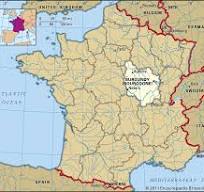
Burgundy is not simply a wine region—it is a world of nuance, a place where terroir is sacred, where vineyards are parsed into tiny plots like sentences in a poem, each expressing something subtly different. Situated in the heart of eastern France, Burgundy is the spiritual home of Pinot Noir and Chardonnay, but calling it merely that would be like calling Paris a city of buildings. Burgundy is emotion. Burgundy is precision. Burgundy is a study in how soil, slope, and sun can shape a grape into something transcendent.
At first glance, the region seems quiet—rolling hills, tidy village squares, stone farmhouses that look unchanged for centuries. But beneath that calmness lies complexity. Burgundy is composed of countless climats and lieux-dits, each with a specific identity, each capable of producing wine distinct from its neighbor just meters away.
Here, the land speaks louder than the winemaker, and tradition demands humility before the vine. The region is divided into five major zones: Chablis in the north, then Côte de Nuits, Côte de Beaune, Côte Chalonnaise, and Mâconnais stretching south. Yet even these categories feel broad for a region that values intricacy over generalization.
Pinot Noir rules the Côte de Nuits, producing reds of remarkable finesse and depth. Burgundy Pinot is rarely bold or loud; it is detailed, layered, and capable of aging into something hauntingly aromatic. Notes of cherry, rose petal, forest floor and spice drift through the glass, shifting with air and time like memories returning. From villages such as Gevrey-Chambertin, Vosne-Romanée, Nuits-Saint-Georges and the storied slope of Romanée-Conti, Pinot Noir becomes a vessel for terroir—expressive yet fragile, powerful yet graceful. The greatest bottles do not shout; they linger, whispering stories long after the glass is empty.
Chardonnay finds its purest articulation in the Côte de Beaune, where wines like Meursault, Puligny-Montrachet and Chassagne-Montrachet set a global benchmark. These are whites with presence—broad, elegant, textured, unfolding with notes of citrus, hazelnut, flint and buttered brioche. Some are rich and generous, others taut and mineral, yet each carries the unmistakable imprint of the limestone soils beneath the vines.
While Pinot Noir gives Burgundy its soul, Chardonnay reveals its voice in light and shadow.
Further north, Chablis stands apart like a cold morning breeze. Here Chardonnay is sharpened by fossils and flint, tasting of green apple, wet stone and oyster shell. The wines are lean, saline, laser-focused—so pure they seem carved from chalk. In the south, the Mâconnais offers a sunnier disposition, producing whites that are rounder, riper and more golden with fruit. Even within these broad zones, classification cuts deeper still: regional wines, village wines, Premier Cru and the revered Grand Cru—the apex of terroir, the smallest plots with the most powerful expression.
Though Burgundy has become synonymous with rarity and prestige, the region retains a pastoral humility. Small family domaines work tiny parcels, often passed down through generations.
There is a sense of continuity—of hands that prune the same vines their parents and grandparents once tended. Wines are born not from manipulation but from careful listening to the land’s rhythms. Burgundy is tradition balanced with curiosity, patience balanced with nature’s unpredictability.
READ MORE: Champagne – A Region Where Terroir Sparkles in Every Bubble
To drink Burgundy is to engage with subtlety. These wines do not offer their secrets quickly; they evolve, pause, unfold and return with new meaning. They reward attention the way art or music does—with layers, detail, emotion. A glass might taste different in five minutes, ten minutes, one hour—proof that wine here is alive.
Burgundy is not merely a region on a label. It is landscape distilled into liquid poetry, a place where soil becomes sensation, where grapes translate geology into scent and flavor. Burgundy invites the drinker not just to taste, but to listen—to the land, to time, and to the quiet power of precision.