Champagne – A Region Where Terroir Sparkles in Every Bubble
Champagne, nestled in the cool northeast of France, is a place where wine is more than agriculture and more than luxury—it is identity, history, and craftsmanship woven into a landscape.
When the word Champagne is spoken, most people think instantly of celebration, of golden bubbles rising in slim glasses, of weddings, launches, victories and milestones.
But Champagne is, first and foremost, a wine region. A geographical expression protected by time and law, defined by climate and soil, shaped by centuries of curiosity, accidents and brilliance. \To explore Champagne is to look beyond the glass and into the land that makes it possible.
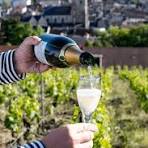
Vineyards in Champagne sit further north than most major wine regions, stretching across five main districts—Montagne de Reims, Vallée de la Marne, Côte des Blancs, Côte de Sézanne and Côte des Bar. The winters are cold, the summers are gentle, and sunlight is modest rather than generous.
At first glance, it seems an unlikely place for wine. Yet here lies the magic: grapes ripen slowly, preserving acidity, tension, and freshness. These qualities, often undesirable in still wine, are the very foundation of great sparkling wine. In Champagne, nature demands restraint, and winemakers answer with precision.
Beneath the vineyards lies another secret to Champagne’s character—chalk. Ancient seabeds, layered deep within the soil, act like reservoirs, storing water and reflecting warmth. The vines push their roots through limestone for nourishment, absorbing minerals that will later shimmer subtly in the glass.
Few wine regions have such a literal connection to history; Champagne is, quite literally, grown on the remains of prehistoric oceans. The result is wines that taste crisp and clean, with flavors that dance between citrus lightness and toasty depth.
The story of Champagne’s bubbles began not with intention, but with accident. Before the 17th century, wines from Champagne were still, quiet, and redder than one might imagine. The cold winters would halt fermentation, and when temperatures rose again in spring, fermentation restarted inside corked barrels and bottles. Pressure built, bottles burst, and winemakers cursed the instability.
But what seemed a flaw soon became fascination. Over time, monks, scientists and vintners learned to control this second fermentation, transforming a once unpredictable process into an art form. The méthode traditionnelle—where wine undergoes a second fermentation in the bottle—is today a hallmark of quality, copied globally but perfected only here.
The grapes that make Champagne what it is—Chardonnay, Pinot Noir and Meunier—each contribute a voice to the blend. Chardonnay brings elegance, floral expression and purity. Pinot Noir adds power, body and structure. Meunier gives fruit, generosity and softness.
Together they form the backbone of non-vintage blends, the most common Champagnes, designed not just for consistency but for signature. A bottle of Champagne is a house’s identity, as recognizable as perfume or handwriting.
Champagne is also a region of contrast. It is home to grand maisons like Moët & Chandon, Veuve Clicquot and Bollinger, with miles of cellars carved beneath cities, holding millions of resting bottles. Yet just beyond the grand avenues are grower-producers—families who farm their own vines and craft wines that speak intimately of place. Both traditions coexist, both are essential, both keep Champagne alive and evolving.
To taste Champagne is to taste celebration, yes, but also chalk, climate and centuries of innovation. It pairs not only with caviar and gold-leaf desserts, but with oysters, fried chicken, popcorn, cheese, and everyday pleasures. It is a wine of luxury, but also a wine of life.
Champagne is not just a drink—it is a landscape in motion, a region carved by cold winds and patient hands. Each bottle holds history, artistry and terroir, captured in bubbles that rise like stories from the glass. To drink Champagne is to sip a place, not just a sparkle.